
What Happens When You Put a Q-Tip in Your Ear?
- Posted on: Apr 7 2026
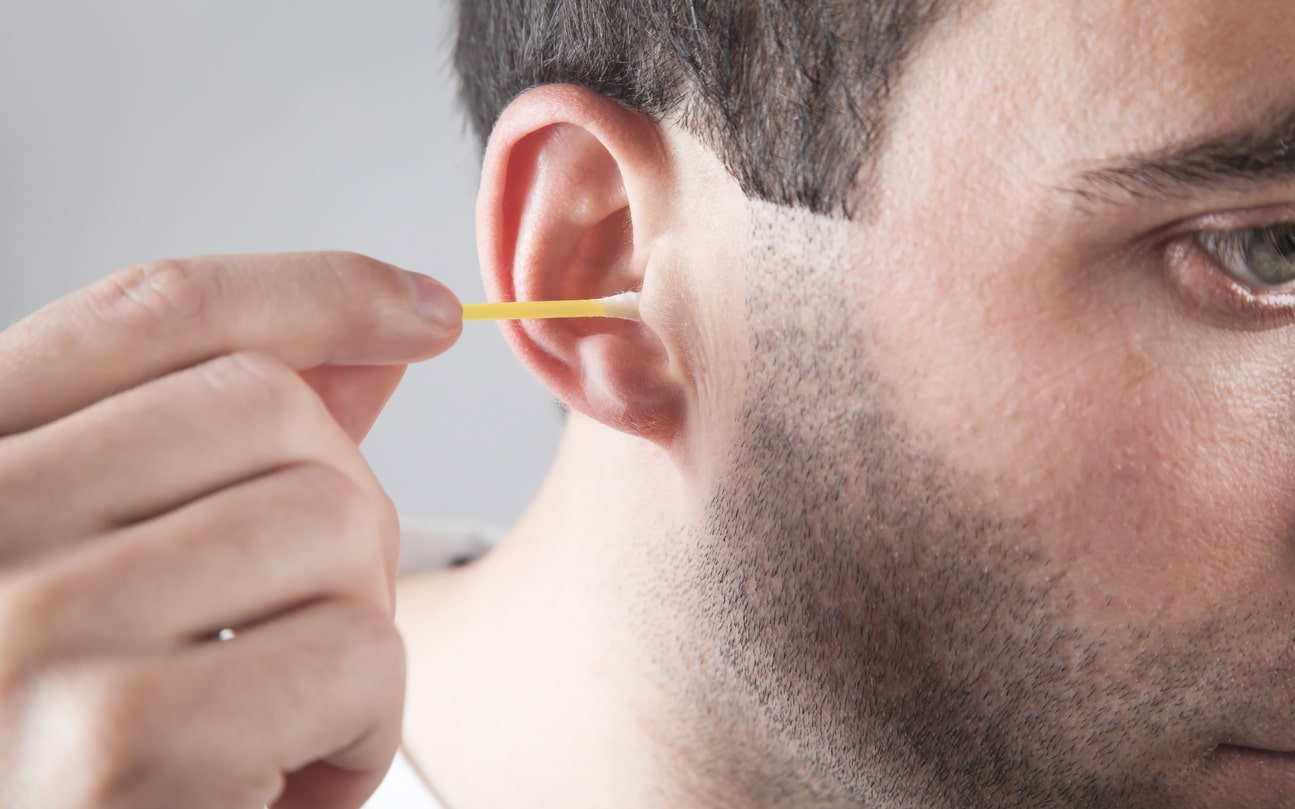
For many people, using a Q-Tip to clean their ears feels like part of a normal hygiene routine. It seems harmless—after all, you’re just removing ear wax, right? In reality, the ear is designed to clean itself, and inserting cotton swabs into the ear canal can disrupt that process and lead to several problems.
Understanding what ear wax actually does and what happens when Q-Tips are used inside the ear canal can help prevent irritation, infection, and even more serious ear injuries.
What Is Ear Wax and Why Do We Have It?
Ear wax, also known as cerumen, is a mixture of dead skin cells, thick secretions from modified sweat glands, and oil from sebaceous glands that line the ear canal. The resulting substance has a protective function for the ear canal. It traps small foreign bodies and creates an antimicrobial environment for the ear canal.
The “Plunger Effect”: Why Q-Tips Often Push Wax Deeper
Placing a Q-tip in the ear risks pushing the wax deeper into the ear canal (the “plunger effect”), which can result in larger and more extensive impaction over time by pushing multiple layers of cerumen on top of each other.
Can Using a Q-Tip Increase the Risk of Infection?
The deeper ear canal has a thin skin layer, meaning the skin sits very close to the bone. Bacteria and fungi can line the skin of the ear canal and generally prevent them from causing infections. Using a Q-Tip can traumatize the skin of the ear canal, leading to infections of the ear canal skin, called otitis externa.
Can Q-Tips Cause a Perforated Eardrum?
Aggressive or deep cleaning of the ear canal using a Q-Tip can cause damage to the ear drum, resulting in perforations to the ear drum. This can, in turn, cause infections in both the space outside the ear drum (outer ear) or the space behind the ear drum (middle ear). It can also cause damage to the ossicles, which are tiny bones that conduct sound from the ear drum to the inner ear.
What If You’re Gentle?
The ear canal is meant to be self-cleaning. Movement of the jaw, as seen with chewing, along with the natural migration of skin from deeper in the ear canal to closer to the opening of the ear canal is generally enough to maintain clean ears.
Are Q-Tips Ever Safe to Use?
Q-Tips can be safe to use for the outer part of the ear, called the pinna. Using them to gently clean around the ear canal can be effective.
How Should You Actually Clean Your Ears?
There are several formulations of over-the-counter ear drops that can be used to clear excess wax. Some contain carbamide peroxide or hydrogen peroxide, which can break up wax and make it more likely to come out of the ear canal. Some contain sodium bicarbonate and glycerin, which also soften wax. It is important not to use these drops if there is an active ear infection or if there is a perforation to the ear drum.
If hearing or pressure does not improve after using drops, or if there is concern for an ear infection, evaluation by an ENT provider can be helpful. Along with being able to clearly visualize the ear canal using microscopes, specialized instruments like curettes and suctions can remove the impaction as painlessly as possible.
Final Thoughts
Although using a Q-Tip in the ear may feel satisfying, the ear canal is designed to maintain itself without the need for internal cleaning. Inserting cotton swabs can push wax deeper, irritate the delicate skin of the ear canal, and increase the risk of infection or injury.
If you are experiencing symptoms such as hearing loss, ear fullness, pain, or persistent wax buildup, it is best to seek medical guidance from an ENT provider rather than attempting to remove it yourself. Safe ear care often means letting the ear do what it was designed to do.
Tagged with: ear wax, Ear wax removal, Q-Tip usage
Posted in: Ear Wax