
Preventing Airplane Ear
- Posted on: Jun 5 2026
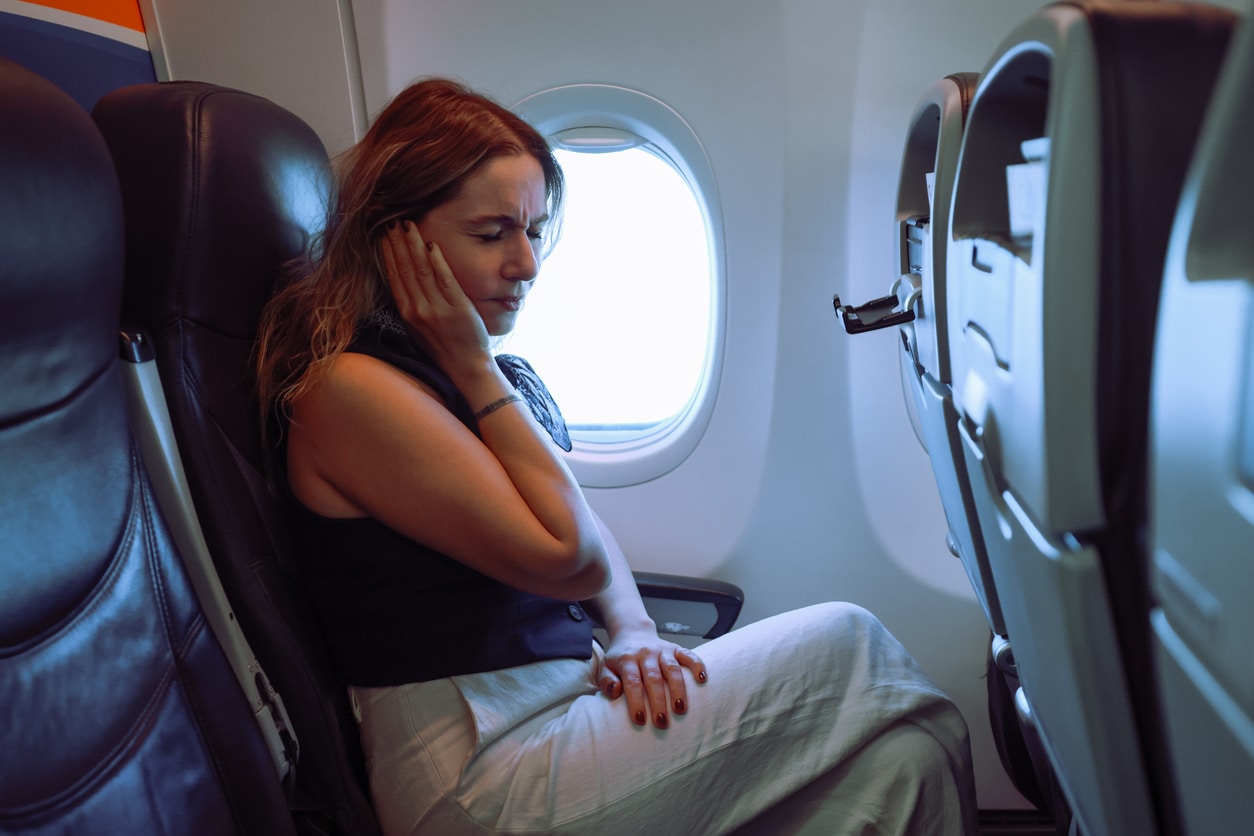
As we head toward the travel season, airline travel usually surges to accommodate the strong demand leisure travel. Unfortunately, some of those travelers will experience ear pain and pressure or muffled hearing, making the experience less than a pleasure.
That feeling of ear pressure can be due to eustachian tube dysfunction. Under normal circumstances, the pressure behind the eardrum (called the middle ear space) should be about the same as the pressure outside of the eardrum (called the outer ear pressure, which is the same as environmental air pressure). The Eustachian tubes are tunnel-like structures that travel from the middle ear space to the throat. Usually, they open briefly with yawning, chewing or swallowing.
These quick opening episodes are enough to maintain the pressure between the middle ear and the outer ear.
What is Eustachian tube dysfunction?
In certain situations, the eustachian tubes can fail to open as they normally do. This results in the middle ear pressure becoming more negative as compared to the outer ear pressure. This can result in a feeling of ear pressure or fullness. It can also cause hearing loss. If left long enough, it can cause fluid to build up behind the eardrum.
What causes Eustachian tube dysfunction?
Eustachian tube dysfunction can happen as a result of anything that causes increased nasal inflammation. Common causes include allergic rhinitis, chronic or acute sinus infection, or even brief upper respiratory infections. Exposure to cigarette smoke or other pollutants can also worsen eustachian tube function.
In children, large adenoid tonsils, which can block the openings of the eustachian tubes, can also result in decreased opening.
How does airplane travel cause ear pain?
The rapid change in elevation on takeoff and landing causes pressure to change quickly in the cabin (and also the outer ear). If the eustachian tubes does not respond quickly enough, the pressure difference between the outer and middle ears can cause ear pain, fullness, hearing loss and occasionally vertigo.
What can be done to treat airplane ear?
- Anything that works to encourage opening of the eustachian tubes would be beneficial. Chewing gum, yawning, or swallowing food or drink, generally during takeoff and landing would accomplish this. A Valsalva maneuver (inhaling, then pinching the nose and closing the mouth while exhaling) can also help.
- Decongestants, either oral or topical, taken before the flight can reduce nasal congestion and improve the ability of the eustachian tubes to open. These should not be used for more than three consecutive days for topical decongestants (such as oxymetazoline) or five days for oral decongestants (such as pseudoephedrine).
- Earplugs can also be used. EarPlane or Eargasm earplugs work by slowing the pressure change in the outer ear, which gives the Eustachian tubes more time to equilibrate the middle ear pressure. They should be inserted before takeoff and an hour before landing.
- Managing allergies with immunotherapy or medical therapy can also result in reduced inflammation and swelling in the nose and improve eustachian tube function. Addressing chronic sinus infections will also help.
- Finally, balloon dilation of the eustachian tubes can improve opening. A balloon-tipped catheter is guided into the eustachian tube opening and dilated, resulting improved ability to open. This is usually done as an outpatient in-office procedure, and can either be done on its own, or in conjunction with other procedures.
At Sinus and Snoring Specialists, we can discuss all of the treatment options for airplane ear and offer you a personalized treatment plan for this travel season and beyond.
Call or securely text our clinic today at 512-601-0303 to request an appointment.
Tagged with: Decongestants for Flying, Ear Pain While Flying, Eustachian Tube, Sinus and Ear Health, Travel Health Tips
Posted in: Ear and Hearing Care